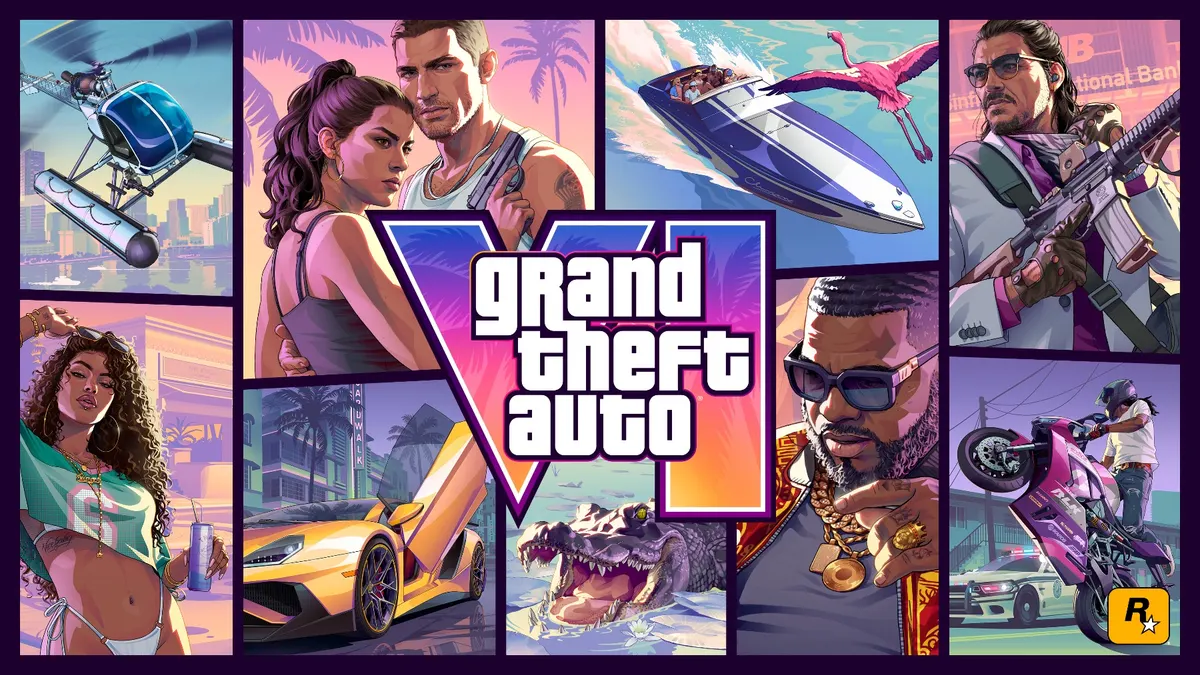
How Rockstar Games Turned a Video Game Into a Global Cultural Phenomenon
Beyond the graphics, gameplay and long-awaited release, Grand Theft Auto VI offers some fascinating lessons about brand building, storytelling, positioning and the power of anticipation.
For more than a decade, millions of people have been waiting for one thing: GTA 6.
Not another trailer. Not another leaked screenshot. Not another rumour about its release date.
The actual game.
Today, November 19, 2026, that wait finally reaches its end as Grand Theft Auto VI launches for PlayStation 5 and Xbox Series X|S.
But here's something worth thinking about.
How does a video game become so important that people who don't even play video games know about its release? How does a company keep an audience interested in a product for over a decade without giving them much information about it?
And perhaps more importantly, what can business owners, marketers and brand strategists learn from it?
To understand that, we need to look beyond the game itself.
It Was Never Just About the Game
The Grand Theft Auto franchise has always been more than a collection of video games.
Since its early days, GTA has built an identity around freedom, controversy, satire, crime, exploration and the ability to experience a fictional world without following the rules of ordinary life.
Every major instalment has contributed something to that identity.
GTA Vice City gave players a memorable interpretation of 1980s Miami-inspired culture. GTA San Andreas introduced an enormous world with an unforgettable story and characters. GTA V took the experience further, introducing three protagonists and a world that continued evolving through GTA Online.
Then came the long wait.
GTA V was released in 2013. For years, fans wondered when the next instalment would arrive.
Rockstar Games didn't need to convince people that Grand Theft Auto was worth playing. It had spent years building that belief.
This is one of the most important things a brand can achieve: making people interested in what you will create next, even before they know what it is.
Think about that from a business perspective.
A lot of companies spend their entire existence trying to convince customers to pay attention to their next product. Rockstar had already built an audience that was actively searching for information about a product that hadn't even been released.
That's the difference between selling a product and building a brand.
The Power of Knowing What Your Brand Stands For
One thing Rockstar has done exceptionally well is maintain a recognisable identity.
You don't need to see the Rockstar Games logo to recognise the tone of a GTA trailer. The visual direction, music, characters, humour and storytelling all contribute to an experience that feels distinctly Grand Theft Auto.
That consistency matters.
Imagine if GTA 6 suddenly became a completely different kind of game, abandoned everything that made the franchise recognisable and tried to appeal to an entirely different audience.
It might still attract attention, but it would risk losing the identity that made people interested in the first place.
This is something many
businesses struggle with. They change their messaging every few months, adopt every new trend and constantly reposition themselves because they believe being different every time is the same as being innovative.
It isn't.
A strong brand can evolve without losing its identity.
Rockstar has introduced new characters, improved its technology, expanded its storytelling and created a much more detailed world. Yet the experience still feels connected to the franchise people know.
Branding lesson: Your brand should be flexible enough to grow but consistent enough to remain recognisable.
Rockstar Understands the Power of Anticipation
Perhaps the most fascinating part of the GTA 6 story is how Rockstar managed to turn waiting into part of the experience.
For years, information about the game was limited.
Fans analysed rumours, discussed possible locations, examined leaked footage and debated what the next instalment might look like.
Then came the first official trailer.
The internet practically exploded.
The trailer attracted approximately 93 million YouTube views within its first 24 hours, setting a record for a non-music video at the time.
Think about the branding implications of that.
Rockstar didn't simply release a trailer. It released something people had been waiting years to see.
The audience was already emotionally invested before the video even started.
This is an important distinction.
Attention can be purchased through advertising, but anticipation is something a brand builds over time.
When people anticipate your next announcement, product or campaign, you have achieved something much more valuable than simply getting them to notice you.
You've given them a reason to care.
Branding lesson: Don't make every communication about asking people to buy something. Give them reasons to follow your brand, become invested in your journey and look forward to what comes next.
You Don't Always Need to Say More
Rockstar is famously protective of information about its projects.
While many companies constantly publish updates to remain visible, Rockstar has historically maintained a relatively controlled communication strategy around its major releases.
This creates an interesting dynamic.
When the company speaks, people listen.
Of course, silence alone does not create excitement. If an unknown company refuses to communicate, people might simply lose interest.
But when a brand has already established trust, recognition and credibility, it can afford to be more selective about what it communicates.
The lesson isn't that every business should disappear for years.
It's that communication should have a purpose.
Not every announcement deserves a campaign. Not every development needs to become a social media post. And not every moment requires your brand to demand attention.
Sometimes, a carefully timed announcement can create more impact than months of unnecessary communication.
The Product Must Justify the Promise
There is another side to the GTA 6 story that businesses should pay attention to.
Expectations.
When you spend years building anticipation, you're also creating enormous pressure for the final product.
People aren't simply expecting a good game. They're expecting something that justifies the wait. Rockstar delayed the game more than once, eventually settling on November 19, 2026, as its release date.
That decision was significant because it meant asking an already impatient audience to wait even longer.
But the company communicated that the additional time was necessary to deliver the level of quality players expected.
This introduces an important branding principle:
Your brand promise creates an expectation. Your actual product determines whether people continue believing in you.
A business can have beautiful branding, impressive advertisements and an excellent marketing strategy.
But if the actual experience disappoints customers, the branding eventually loses its power.
A good brand doesn't just know how to make promises. It understands the responsibility of keeping them.
Building an Audience Is Different From Building a Community
One of the reasons GTA 6 has become such a massive cultural event is the community surrounding the franchise.
People don't just wait for Rockstar's announcements. They discuss them, create content around them, analyse trailers, share theories and introduce other people to the conversation.
The audience has become part of the marketing ecosystem.
This is particularly interesting because Rockstar doesn't have to personally create every conversation about GTA.
Its fans do much of that work.
Every theory, reaction video, discussion and fan-made post introduces the game to another audience.
This is what happens when a brand creates something people genuinely want to talk about.
For businesses, this is a reminder that customers shouldn't always be treated as the final destination of marketing.
They can become participants in the brand experience.
Give people something worth discussing. Create experiences worth sharing. Build a product that makes customers want to tell other people about it.
That's how a brand can grow beyond its own advertising budget.
What GTA 6 Teaches Us About Branding
There are several lessons businesses can take from Rockstar's approach:
- 1. Build an identity before chasing attention.
People should be able to recognise what your brand represents without having to read a long explanation.
- 2. Consistency creates recognition.
Your brand can evolve, but constantly abandoning its identity makes it difficult for people to build a connection with it.
- 3. Anticipation is valuable.
Give your audience something to look forward to. Don't make every interaction feel like a sales pitch.
- 4. Your product is part of your branding.
A beautiful identity might attract customers, but the actual experience determines whether they stay.
- 5. Build something people want to talk about.
The strongest marketing opportunities sometimes come from customers who voluntarily share their experiences.
- 6. Don't confuse visibility with relevance.
Being everywhere doesn't automatically make a brand valuable. What matters is whether people have a reason to pay attention.
The Bigger Picture: Building a Brand People Remember
There is something interesting about the GTA 6 phenomenon.
Rockstar isn't introducing Grand Theft Auto to the world for the first time. It's benefiting from years of accumulated recognition, memorable experiences, cultural relevance and customer relationships.
The company has built a franchise that people have grown up with.
For some, GTA is a childhood memory. For others, it's a game they played with friends. And for millions of people, GTA 6 represents the next chapter of something they've followed for years.
That's what makes this release bigger than a conventional product launch.
It demonstrates the long-term value of building a brand that people form genuine connections with.
And perhaps that's the biggest lesson for anyone building a business:
You don't just want people to recognise your brand today.
You want them to remember it tomorrow, talk about it next year and still be interested in what you're creating years from now.
Because the ultimate goal of branding isn't simply to make people notice you.
It's to give them a reason to care.